Record added successfully



Perched on a rocky promontory just outside Shobak, the ancient site of Umm Tuwayrat offers travelers a rare glimpse into the ritual landscapes of Jordan’s Bronze Age—where stone monuments and mystery still shape the desert horizon.
This little-known archaeological gem, located about a kilometre east of the modern town, is a sprawling dolmen field believed to date back thousands of years. Unlike more famous sites, Umm Tuwayrat remains largely untouched by mass tourism, making it an intriguing destination for those drawn to off-the-beaten-path history.
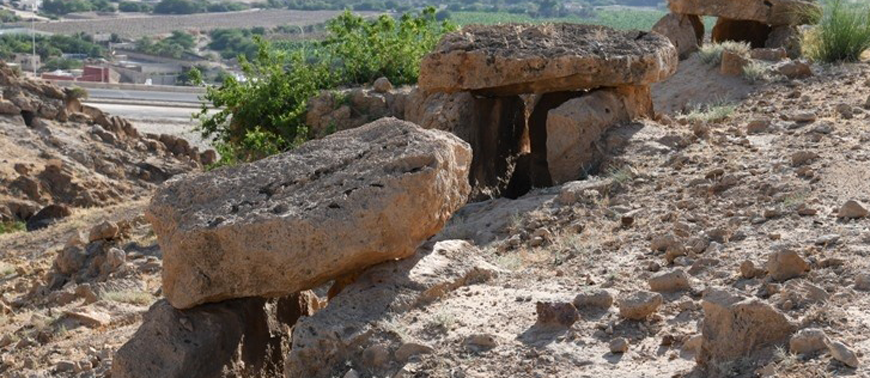
Recent research led by the Jagiellonian University has shed new light on the site’s significance. Through detailed geological mapping, scientists discovered that the area sits atop layers dating from the Late Cretaceous to the Palaeocene period. These layers contain abundant siliceous rocks, particularly chert, which ancient communities likely used to craft stone tools—linking the natural environment directly to human activity.
But it is the site’s stone architecture that truly captures the imagination. Within what appear to be symbolic boundaries—possibly marked by now-fragmented stone walls—archaeologists identified 12 dolmens alongside at least ten stone circles and mounds. These enigmatic structures hint at a complex ceremonial landscape rather than a settlement or agricultural site.
Given the rocky terrain, farming is unlikely to have taken place here. Instead, researchers suggest that Umm Tuwayrat served a funerary and ritual purpose. The dolmens, some of which remain remarkably well preserved, were likely used for burials. Nearby stone circles may have played a role in ceremonial practices, perhaps linked to preparing the dead before their final interment.
Inside one of the best-preserved structures, archaeologists uncovered human remains arranged in a non-anatomical position—bones carefully folded and placed along one wall. This discovery supports the idea of secondary burial rituals, where bodies were first processed elsewhere before being laid to rest within the dolmens.
Nature, too, has left its mark on the site. Several damaged dolmens appear to have collapsed in the same direction, suggesting past earthquakes may have reshaped the landscape over time.
Adding to the mystery are unusual features found at the hilltop, including a carved well and a rectangular pool. Their purpose—and whether they date to the same period as the dolmens—remains unknown, offering yet another layer of intrigue for both researchers and curious visitors.
For travelers exploring southern Jordan, Umm Tuwayrat is more than just an archaeological site—it’s a quiet, atmospheric window into ancient beliefs and rituals. Surrounded by rugged terrain and sweeping views, it invites visitors to step beyond the well-trodden paths and discover a deeper, more mysterious past.